
Category: Reviews
The great Letterboxd-Goodreads merger.
-
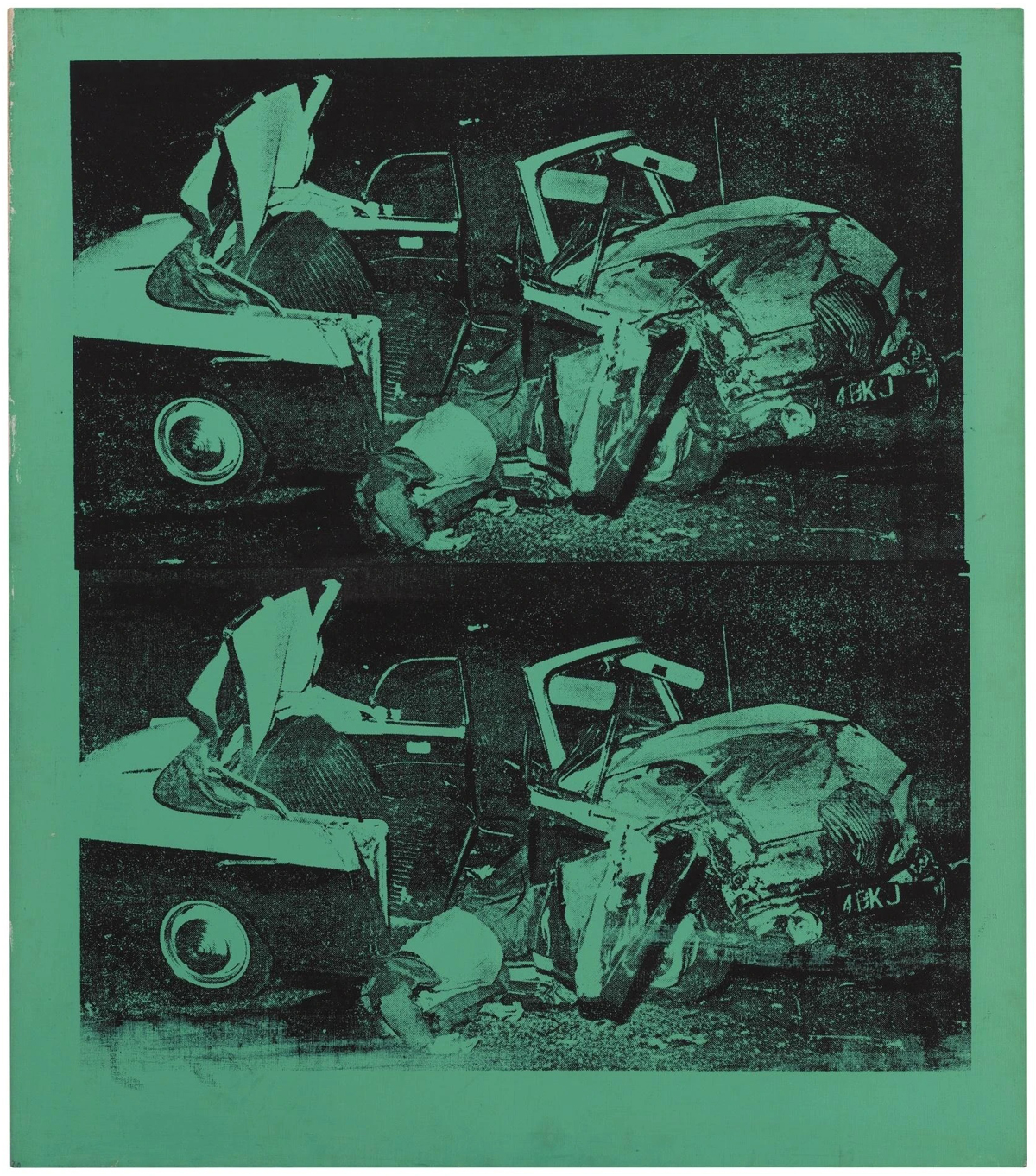
Crash: Auto-Fetish
In Ovid’s Metamorphoses, the Cypriot sculptor, Pygmalion, carves an ivory statue and falls in love with her after being disillusioned with real women and the wickedness of the environment around him. He is no longer capable of enjoying the pleasures of reality; he must shun them and create his own artificial delights. Pygmalion dresses the statue, gives gifts of orient pearls, and even takes her to bed. The fantastical element is one where the girl—and it is always a girl—transcends her quality of objectness and loves him back.
-
The Waves: The Little Language Is Enough
This is The Waves; written in such a way that it can’t be interpreted at a distance. Woolf herself called it a ‘playpoem’ rather a novel. There is no action, no descriptions, only a rotating cycle of soliloquies: deeply vulnerable statements that have almost no natural connection to the ones that precede them or the ones that follow. The six speakers are unique characters, and yet they’re all the same. They’re defined by their types, then they subvert the portraits they’ve been painting of themselves. Instead, this whole collection must be read granularly; macro interpretations betray its architecture.

-
Either/Or: Longing Correctly
Responding to critics of his colossal 800-page debut philosophical work, which is buried in pseudonyms and essays, Kierkegaard insisted that people had to read every page. In fact, he demanded it. It’s not that he was clickbaiting towards an exciting finish (“the last one will shock you!”) but instead, the book’s dialectic structure of argument and counter-argument meant that critiquing a part was pointless if it didn’t consider the whole, like judging a joke before hearing the punchline. Listen to all of what I’m saying, or don’t listen at all.

-
Backrooms: Against Reanimation
Think of the worst moment of your life. Reanimate everything from the exact moment your heart collapsed to every dust mote that happened to eavesdrop on that scene. Now re-reanimate it. In fact, conjure this scene daily for the rest of your life. After six months of these daily reveries, are the details the same? What about after a year, or a decade? In your canonised history, you may have substituted wallpaper for plaster, or day for night. Memory reconstruction has turned into memory replacement.

-
Intermezzo: Chess and Love
Why is it that when a writer is tasked with putting chess to paper, they feel compelled to personify the game with hidden ley lines? As if a mysterious force imbues its moves with a deeper meaning: the soft, subtle bishop move to G7 is actually the player’s internalised trauma, the loss of the father figure manifesting itself within the game. The long diagonal? Simple. It represents their future in clear sight, the rest of their life perfectly spanned out in front of their eyes.
